Next to line 15, enter “CCF” and the amount of the deduction. Only businesses that are owned and operated by spouses as co-owners (and not in the name of a state law entity) qualify for the election. Thus, a business owned and operated by spouses through an LLC does not qualify for the election of a qualified joint venture. You and your spouse must operate a business to make this election. Do not make the election for jointly owned property that is not a trade or business.
You can also deduct the cost of books, professional instruments, equipment, etc., if you normally use them within a year. However, if their usefulness extends substantially beyond a year, you must generally recover their costs through depreciation. If you paid more mortgage interest than is shown on Form 1098, include the amount on line 16a. Attach a statement to your return explaining the difference and enter “See attached” in the margin next to line 16a. Don’t include mortgage interest that must be capitalized, for example, added to basis. 551, under Uniform Capitalization Rules, for details.
Changing your method of accounting for inventory.
We’ve broken down the form into sections, so you can see what the IRS expects from you and what records you’ll need at tax time. The following TurboTax Online offers may be available for tax year 2024. Intuit reserves the right to modify or terminate any offer at any time for any reason in its sole discretion. Unless otherwise stated, each offer is not available in combination with any other TurboTax offers. Certain discount offers may not be valid for mobile in-app purchases and may be available only for a limited period of time.
- These rules could affect how much interest you are allowed to deduct on Schedule C.
- You figure the average monthly allowable square footage by adding the amount of allowable square feet you used in each month and dividing the sum by 12.
- Here you’ll add up all of your business expenses, similar to how you use Part II of Schedule F to add up all of your farming-related expenses.
- Certain Medicaid waiver payments that are reported to you on Form 1099-MISC or Form 1099-NEC may be nontaxable.
From that total, subtract the value of your closing inventory. Enter that amount in Part I to reduce your gross income. Taxpayers can make an election to opt out of the new bonus depreciation rules and use 50% bonus first year depreciation per the prior rules for the first tax year ending after September 27, 2017. You can download all versions of a Schedule C on the IRS website. You can also use online tax preparation software to access a Schedule C and complete your tax return. Schedule C has five parts for reporting income and expenses.
You need to fill out schedule C for self employment business income. You are considered to have your own business for it. All features, services, support, prices, offers, terms and conditions are subject to change without notice.
Desktop Products
The information may not apply to your specific situation. Please consult with a qualified tax professional regarding your individual circumstances before making any tax-related decisions. You are not required to provide the information requested on a form that is subject to the Paperwork Reduction Act unless the form displays a valid OMB control number. Books or records relating to a form or its instructions must be retained as long as their contents may become material in the administration of any Internal Revenue law. Generally, tax returns and return information are confidential, as required by section 6103.
- Also, check the box if you are reopening or restarting this business after temporarily closing it, and you didn’t file a 2023 Schedule C for this business.
- You can earn W-2 income and also still report separate income on Schedule C. This usually requires working as a freelancer, independent contractor, at a side gig, or running your own small business.
- Part 1 of Schedule C is where you record your total income and the cost of your sales.
- Examples are accident and health plans, group-term life insurance, and dependent care assistance programs.
Step 7: Review and File
By following these steps and understanding the essentials of Schedule C, you can confidently report your business income and deductions, ensuring compliance with tax regulations. If you operate multiple businesses, you’ll need to file a separate Schedule C for each turbo tax schedule c one. TurboTax can handle multiple Schedule Cs within the same tax return. Maintaining detailed records of your income and expenses throughout the year can make filing Schedule C much easier.
If you do not have such an EIN, leave line D blank. IRS Schedule C, Profit or Loss from Business, is a tax form you file with your Form 1040 to report income and expenses for your business. The resulting profit or loss is typically considered self-employment income. Small business owners and self-employed individuals can use a Schedule C form to report profits or losses from a business. When you file your taxes, you can attach Schedule C to your regular 1040 form.
If you rented or leased vehicles, machinery, or equipment, enter on line 20a the business portion of your rental cost. But if you leased a vehicle for a term of 30 days or more, you may have to reduce your deduction by the inclusion amount. Include fees for tax advice related to your business and for preparation of the tax forms related to your business. Also, include expenses incurred in resolving asserted tax deficiencies related to your business. If you must file Form 8990, figure the limit on your business interest expenses on Form 8990 before completing lines 16a and 16b.
Tax & Online Software Products
Consider using accounting software or apps to track your financial activities. Schedule C, also known as “Profit or Loss from Business,” is a tax form used to report income or loss from a business you operated or a profession you practiced as a sole proprietor. A taxpayer who had received a one-off 1099-MISC for work as a contractor who doesn’t have any business expenses.
You also use Form 4562 if you elect the Section 179 „expensing” deduction. Section 179 lets you deduct the full cost of assets (both new and used) in the year they are placed in service, subject to certain limits. Total up these items and subtract your cost of goods sold (which is calculated in Part III and explained below) to arrive at gross income. Here are the self-employed expenses you can deduct and where to enter them. We see people get confused and they keep logging in to online software which will require them to pay at the end.
Educational Services
If you make this election, include the interest in the total on Schedule 2 (Form 1040), line 14, and enter the amount of interest and “453(l)(3)” on the line next to the entry space. Sarah is an Enrolled Agent with the IRS and a former staff writer at Keeper. In 2022, she was named one of CPA Practice Advisor’s 20 Under 40 Top Influencers in the field of accounting. Her work has been featured in Business Insider, Money Under 30, Best Life, GOBankingRates, and Shopify. Sarah has spent nearly a decade in public accounting and has extensive experience offering strategic tax planning at the state and federal level.
Which versions of turbo tax include schedule C?
For more information about qualifying business uses, see Qualifying for a Deduction in Pub. Instead, include the amount from line 36 of your Form 8829 on line 30. However, you can fully deduct meals and incidentals furnished or reimbursed to an employee if you properly treat the expense as wages subject to withholding.
In 2019, 96% of farm households earned at least some of their income off the farm, and small family farms derived more than half of their household income from off-farm sources. In addition to the stress and work involved in maintaining a second job, non-farming income can also create considerable headaches for farmers during tax season. If your principal source of income is from farming activities, you should file Schedule F. Film and television and live theatrical production expenses. For details on making this election and requirements for using the de minimis safe harbor for tangible property, see chapter 8 of Pub.
This is where you record office rent or lease costs. This line reports interest paid on all other channels, such as credit cards and loans. While our bookkeepers don’t carry Vibranium weapons, the Keeper team can help you track your advertising costs during the year directly in our app. Remember all those 1099-NECs and 1099-Ks you’ve been saving? Tally up your income for the year using your 1099s and bank statements and input the total in box one.
Naturally, Dr. Banner had a team of S.H.I.E.L.D’s top bookkeepers keeping track of these expenses for him. As you can imagine, it’s not always easy for The Hulk to get good press, so Dr. Banner ran several social media campaigns to improve his public image. Line 34 asks if you’ve made any changes to how you track or value inventory. Cost of goods sold (COGS) refers to the costs directly related to creating a product. For example, if you sell artwork, your COGS would be things like canvases and paint.
]]>
For these entities, the potential tax savings and cash flow benefits from deferring taxes can be substantial, especially in an inflationary economic environment. However, the main reason for discontinuing the use of LIFO under Bakery Accounting IFRS and ASPE is the use of outdated information on the balance sheet. Recall that with the LIFO method, there is a low quality of balance sheet valuation. Therefore, the balance sheet may contain outdated costs that are not relevant to users of financial statements. It’s a method of accounting used in businesses where the most recent cost (last-in) of inventory is used as the cost basis for the most recent sold (first-out) units of a good. This is why LIFO creates higher costs and lowers net income in times of inflation.
Step 2: Determine the number of units sold
So, Lee decides to use the LIFO method, which means he will use the bookkeeping price it cost him to buy lamps in December. It’s well-suited for businesses with large volumes of similar inventory items. Each method has its strengths and may be more suitable depending on your business type and inventory management needs.
Financial Flexibility for Businesses with Volatile Costs
For example, a company that sells seafood products would not realistically use their newly-acquired inventory first in selling and shipping their products. In other words, the seafood company would never leave their oldest inventory sitting idle since the food could spoil and lead to losses. Companies should perform complete physical inventory audits periodically, such as annually, to verify inventory quantities on-hand.
- FIFO calculates cost of goods sold (COGS) based on older, lower-cost inventory, while LIFO uses the most recent, higher-cost inventory for COGS calculations.
- Thus we can see the value of the Inventory is affected to a large extent by the method of valuation that the business in question adopts.
- This also means that the earliest goods (often the least expensive) are reported under the COGS.
- Keeping the LIFO reserve up-to-date improves the accuracy of financial reporting and prevents distorted operational metrics.
- As we move down the table, row number reduces and thus the order in which value is being fetched is like 7, 6, 5, 4, 3, 2, 1.
We and our partners process data to provide:
This method ensures that products with shorter shelf lives—such as skincare, hair care, and hygiene products—move efficiently while maintaining accurate inventory valuation. FIFO is the most commonly used inventory valuation method across industrial sectors where inventory needs to move in a natural lifo formula order or where accuracy is a priority. By continuously rotating stock and ensuring that older items are sold first, FIFO minimizes losses from expired or outdated inventory.
A bicycle shop has the following sales, purchases, and inventory relating to a specific model during the month of January. The value of ending inventory is the same under LIFO whether you calculate on periodic system or the perpetual system. LIFO method values the ending inventory on the cost of the earliest purchases. Now that we know that the ending inventory after the six days is four units, we assign it the cost of the most earliest purchase which was made on January 1 for $500 per unit. Let’s calculate the value of ending inventory using the data from the first example using the periodic LIFO technique. The example above shows how inventory value is calculated under a perpetual inventory system using the LIFO method.


Hubdoc hubdoc transactions are automatically matched to the corresponding transaction in the bank feed, ready for one-click reconciliation and allowing for audit proofed books.

Data safety
Accounting and bookkeeping practices spend hours of their time chasing client documents and doing manual data entry. With Hubdoc, these tasks are automated, so you and your clients get that time back plus the accurate data you need to make better decisions. Hubdoc, a Xero-owned company, helps you spend less time chasing financial documents, and more time running https://www.bookstime.com/articles/annual-income your business. Since being acquired by Xero, Hubdoc continues to evolve into a feature-rich platform for Xero users to capitalize on. All your financial documents are securely stored and managed from one place, giving your business peace of mind. Once documents have been normal balance seamlessly uploaded, the key data is extracted and synced with Xero or Quickbooks Online as an accurately coded transaction with the source document attached.
- Since being acquired by Xero, Hubdoc continues to evolve into a feature-rich platform for Xero users to capitalize on.
- All your financial documents are securely stored and managed from one place, giving your business peace of mind.
- Hubdoc transactions are automatically matched to the corresponding transaction in the bank feed, ready for one-click reconciliation and allowing for audit proofed books.
- Once documents have been seamlessly uploaded, the key data is extracted and synced with Xero or Quickbooks Online as an accurately coded transaction with the source document attached.
- Hubdoc, a Xero-owned company, helps you spend less time chasing financial documents, and more time running your business.

However, they are still required to file informational returns to the IRS using Form 990. Nonprofit organizations are sometimes called NPOs or 501(c)(3) organizations based on the section of the Internal Revenue Service (IRS) tax code that permits them to operate. However, it should not represent more than 10-20% of the organization’s activities, nor consume any more than https://nerdbot.com/2025/06/10/the-key-benefits-of-accounting-services-for-nonprofit-organizations/ 10-20% of the resources of the organization.
- Private foundations, on the other hand, often derive funding from a single source, such as a family or corporation.
- “NFPOs—like nonprofits but usually smaller—serve members rather than a broad public mission,” Helfand said, who cited organizations like hobby clubs as an example.
- The deductibility of contributions to a private foundation is more limited than donations made to a public charity.
- Organizations must operate in ways that continue to align with their mission.
- The IRC is the tax law issued by the United States Treasury through the IRS.
- Furthermore, patrons who donate to a 501c3 can claim a tax deduction for their contributions.
nonprofit organization
A nonprofit operates for the betterment of the public and the community at large. Unlike for-profit organizations, nonprofits do not aim to generate profits for owners. The majority of their revenue comes from donations, grants and memberships. A nonprofit uses its resources and activities to serve the public good and advance its mission. This may involve addressing social issues, promoting education, supporting healthcare initiatives or advocating for environmental conservation. Not all nonprofits qualify – they must fit specific purposes (like charitable, educational, religious, or social welfare, etc. depending on the section).

File for 501(c)( Federal Income Tax-Exemption with the IRS
However, they do have a vital technical difference that can determine which category your organization falls under. Building a loyal donor base requires ongoing communication and transparency. Understanding donor interests and motivations can foster long-term relationships. As nonprofits grow their network of supporters, they increase their capacity for impact.

Understanding the Differences Between 501(c)( and 501(c)( Organizations
- There are some activities for which a charitable nonprofit could be taxed, typically as an unrelated business activity.
- In a membership nonprofit, voting members might appoint the board of directors, remove a director, change the bylaws, or dissolve the nonprofit.
- The U.S. government uses exemption from federal income tax to encourage the formation and development of such nonprofits.
- However, they do have a vital technical difference that can determine which category your organization falls under.
- Government bodies, mainly the Internal Revenue Service (IRS), monitor adherence to applicable laws.
Once you’ve decided which type of nonprofit you want to establish, you’ll need to apply for tax-exempt status with the IRS. In addition, public charities must maintain a governing body that is mostly made up of independent, unrelated individuals. This means the majority of board members should not be related by blood, marriage, or outside business connection. Donations to public charities can be tax-deductible to the individual donor up to 60% of the donor’s income, although other tax and income circumstances can affect the deductibility of contributions to public charities. On the other hand, once an organization is officially a 501c3 nonprofit, it no longer belongs to the founder.

How to Start a 501(c)( : The Nonprofit’s Guide (
A private foundation is typically held by an individual, a family, or a corporation. A 501(c)(3) organization cannot use its activities to influence legislation in a substantial way, including participating in any campaign activities to support or deny any particular political candidate. A 501(c)(3) nonprofit is typically cannot engage in lobbying except in instances when its expenditures are below a certain amount.

Starting a Nonprofit? We Can Help!
But it’s wise to be aware of the accounting services for nonprofit organizations responsibilities and trade-offs involved. Earning tax-exempt status is a big achievement for a nonprofit, but it’s not a lifetime guarantee. There are several ways a nonprofit can jeopardize or outright lose its tax-exempt status. Here, we outline the major pitfalls that can lead to revocation – essentially a list of “what not to do” once you’re a tax-exempt entity. Forming a nonprofit and securing tax-exempt status can be a rewarding process, but it’s easy to stumble if you’re not careful.
These include donations from corporations, individuals, and other nonprofit organizations. Many nonprofits are exempt from most federal income taxes and some state taxes, such as sales and property taxes. Also, donors may be able to take a tax deduction for their donations to these organizations. According to (NCCS) the National Center for Charitable Statistics more than 1.5 million nonprofit organizations are registered in the United States. The 1.5 million includes public charities, private foundations and the many other types of nonprofit organizations mentioned above. Additional organizations include chambers of commerce organizations, fraternal organizations, and civic leagues.
Its finances, including salaries, are available to members of the public. A 501(c)(3) organization must operate within the confines of the law pertaining to 501(c)(3) organizations to maintain its favorable tax treatment. Your organization could lose its tax-exempt status if these regulations are not followed. The IRS defines public support as „… from governmental units, from contributions made directly or indirectly by the general public, or from a combination of these sources.” Likewise, individuals can only take a personal tax deduction when they donate to a charity that is qualified and if they itemize their deductions on their tax return. While it is acceptable to use any of these versions the most widely accepted spelling is nonprofit all one word.
]]>
However, companies must ensure that their implementation of FIFO complies with the specific requirements and disclosures mandated by these standards. Inventory management is a critical aspect of any business that handles physical products. Effective inventory management ensures that a company can meet customer demand without overstocking, which can tie up capital and increase holding costs.
- With over a decade of editorial experience, Rob Watts breaks down complex topics for small businesses that want to grow and succeed.
- This brings the total of shirts to 150 and total inventory cost to $800.
- You will also have a higher ending inventory value on your balance sheet, increasing your assets.
- The higher valuation tends to be more realistic during inflationary periods compared to other techniques like weighted average costing.
- By aligning inventory costs with current market conditions, companies can better predict cash flow needs and plan for future expenses.
Average cost inventory

The weighted average method calculates COGS based on the average cost of units purchased over an accounting period, rather than matching costs with specific inventory units. FIFO, or First In, Fast Out, is a common inventory valuation method that assumes the products purchased first are the first ones sold. This calculation method typically results in a higher net income being recorded for the business.
- On the other hand, LIFO can be beneficial for companies looking to reduce their tax liabilities by reporting lower profits.
- While the LIFO inventory valuation method is accepted in the United States, it is considered controversial and prohibited by the International Financial Reporting Standards (IFRS).
- Both the LIFO and FIFO methods are permitted under generally accepted accounting principles (GAAP).
- Additionally, during inflationary periods, FIFO can result in better matching of current sales revenue with historical costs, providing a more accurate reflection of profitability.
- The FIFO method is the first in, first out way of dealing with and assigning value to inventory.
- Again, these are short-term differences that are eliminated when all of the shirts are sold.
( . Cost of materials issued for production during the year – FIFO method:
- Leaving the newer, more expensive inventory for a higher costs environment.
- The latest costs for manufacturing or acquiring the inventory are reflected in inventory, and therefore, the balance sheet reflects the approximate current market value.
- FIFO accounts for this by assuming that the products produced first are the first to be sold or disposed of.
- Goods available for sale totals 250 gloves, and the gloves are either sold (added to cost of goods sold) or remain in ending inventory.
- If you sell 120 units, the cost of goods sold is calculated using the recent $20 units first, followed by the remaining units from the previous batch.
FIFO is a good method for calculating COGS in a business with fluctuating inventory costs. FIFO impacts key financial statements and metrics like net income, inventory valuation, and cost of goods sold. By understanding how the FIFO method works, businesses can more accurately track inventory costs over time. In contrast to the FIFO inventory valuation method where the oldest products are moved first, LIFO, or Last In, First Out, assumes that the most recently purchased products are sold first. In a rising price environment, this has the opposite effect on net income, where it is reduced compared to the FIFO inventory accounting method.
Sales Forecasting Software vs. an Excel Sheet – Which One Wins?
- For many companies, inventory represents a large, if not the largest, portion of their assets.
- This will provide a more accurate analysis of how much money you’re really making with each product sold out of your inventory.
- For example, a company that sells seafood products would not realistically use their newly-acquired inventory first in selling and shipping their products.
- My goal is to create next-level content that elevates your ecommerce and fulfillment knowledge.
- Understanding your ending inventory helps you price products more effectively.
- The FIFO method assumes you sell your products in the order they were produced or purchased.
The profit (taxable income) is $6,900, regardless of when inventory items are considered to be sold during a particular month. fifo equation Adjusting for returns ensures financial statements accurately reflect net sales and inventory levels. When products are returned, businesses must update sales records and adjust inventory counts. This involves reversing the original sale transaction and reinstating the returned inventory at its initial cost. These adjustments must be recorded in the same accounting period to comply with GAAP and IFRS.
Inventory Grouping

LIFO generates lower profits in early periods and more profit in later months. Assume that the sporting goods store Coffee Shop Accounting sells the 250 baseball gloves in goods available for sale. All costs are posted to the cost of goods sold account, and ending inventory has a zero balance.


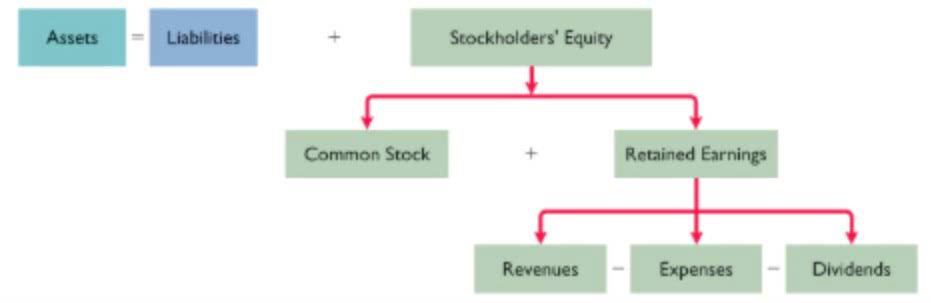
The basic concept of process costing is we assume all products consume similar overhead which we need to share the same overhead cost to all of them. What if there are some products are still in progress at the month end? They also consume some overhead too, so it comes to these two methods above which we can use assets = liabilities + equity to allocate the manufacturing overhead. It’s well-suited for businesses with large volumes of similar inventory items.
]]>